Gallery
The lion at work across the Washington area
Lion and dragon: Lunar New Year visits, opening-day blessings, wedding banquets and festival stages from more than four decades of performing in D.C., Maryland and Virginia.
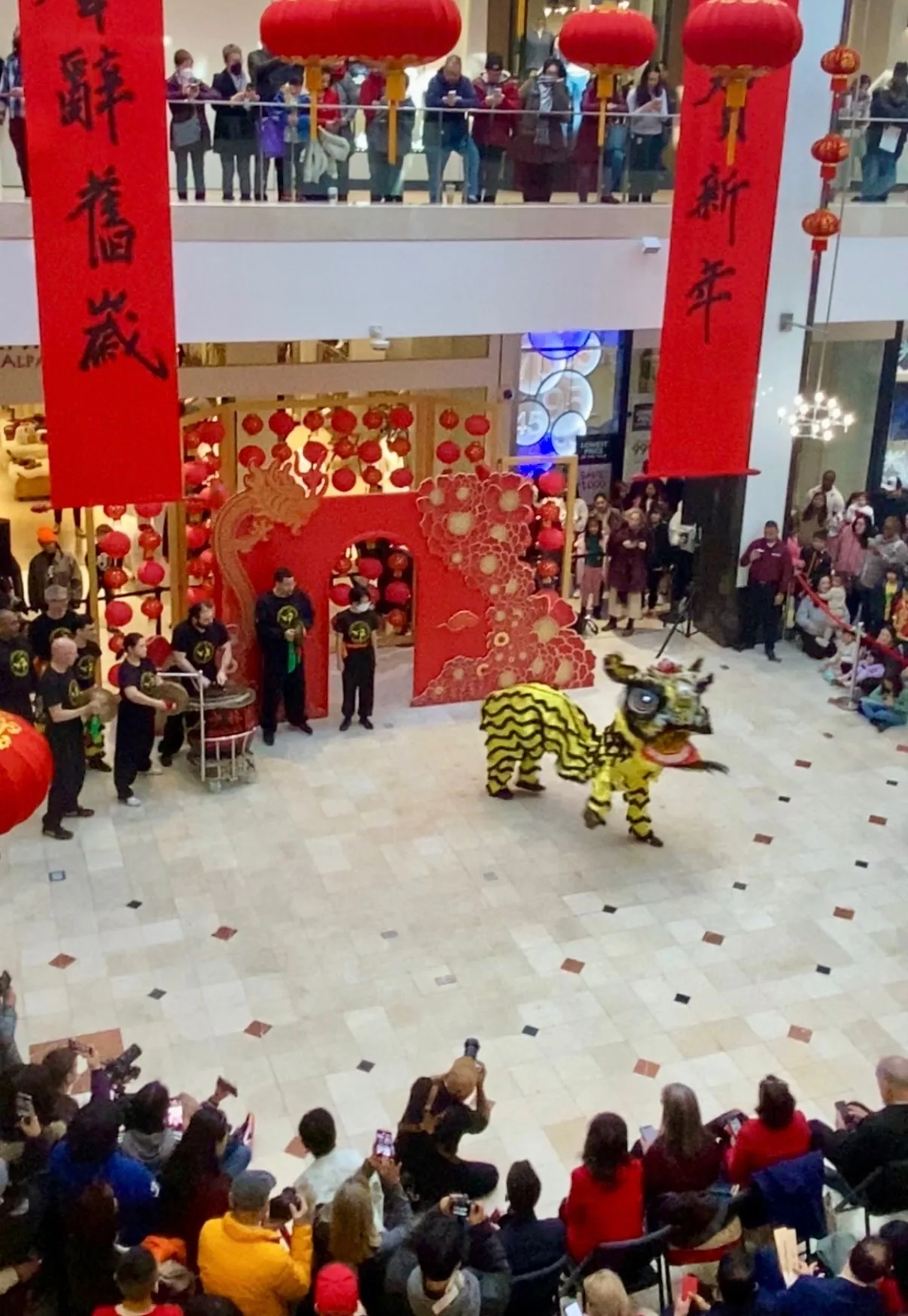
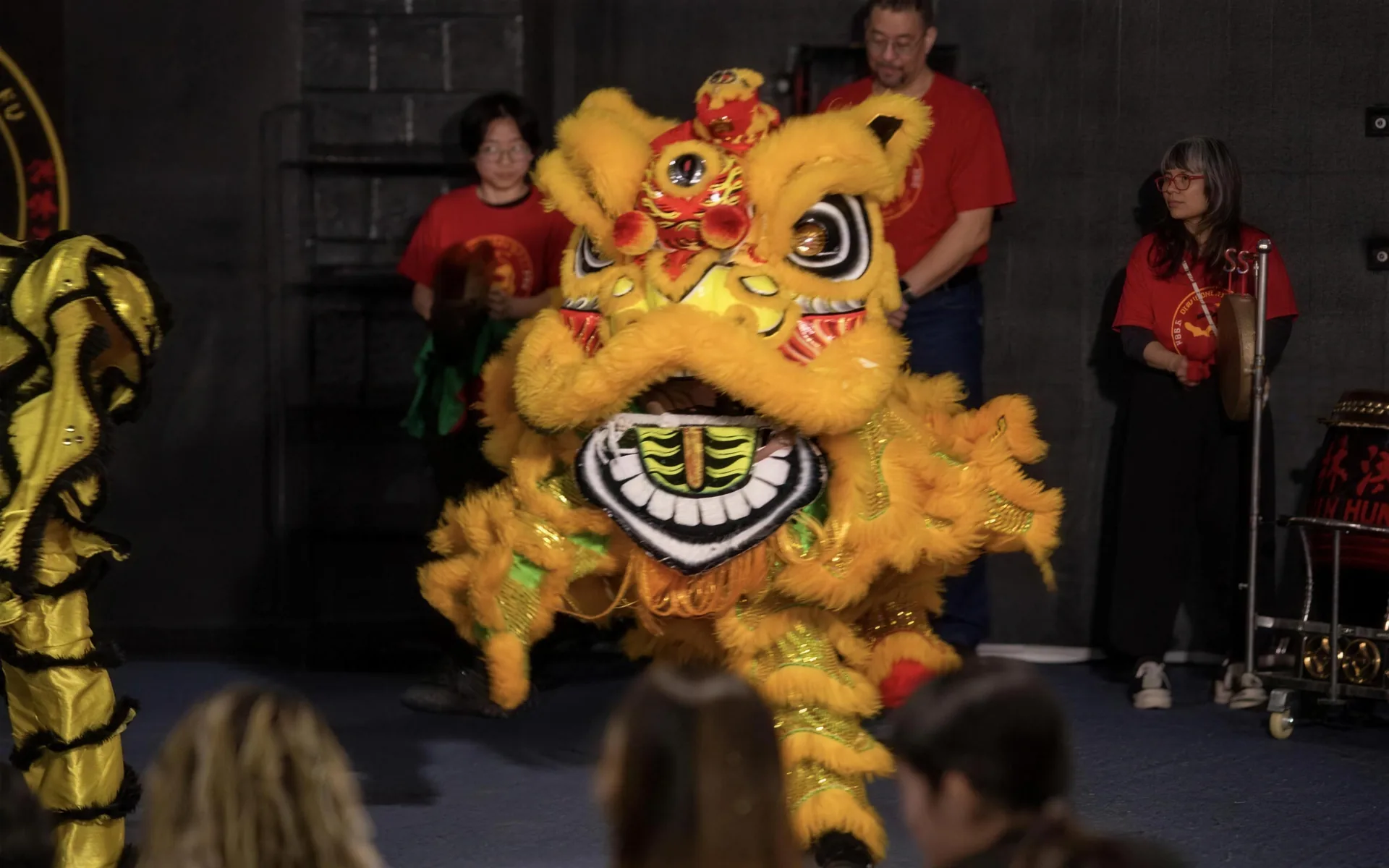
The lion with live percussion at the Kensington school Lunar New Year in a shopping mall atrium 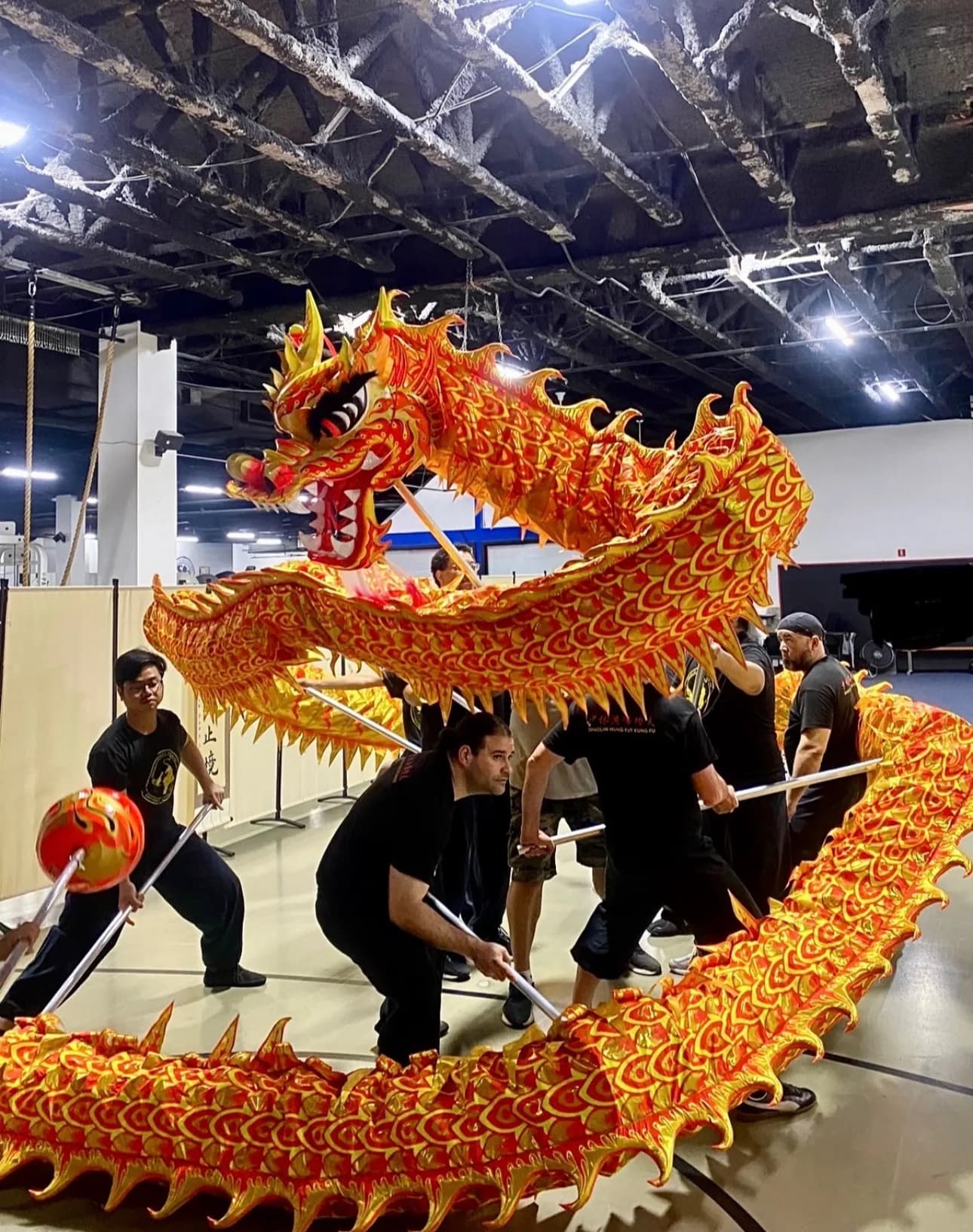
The team's dragon and pearl in the school's training hall 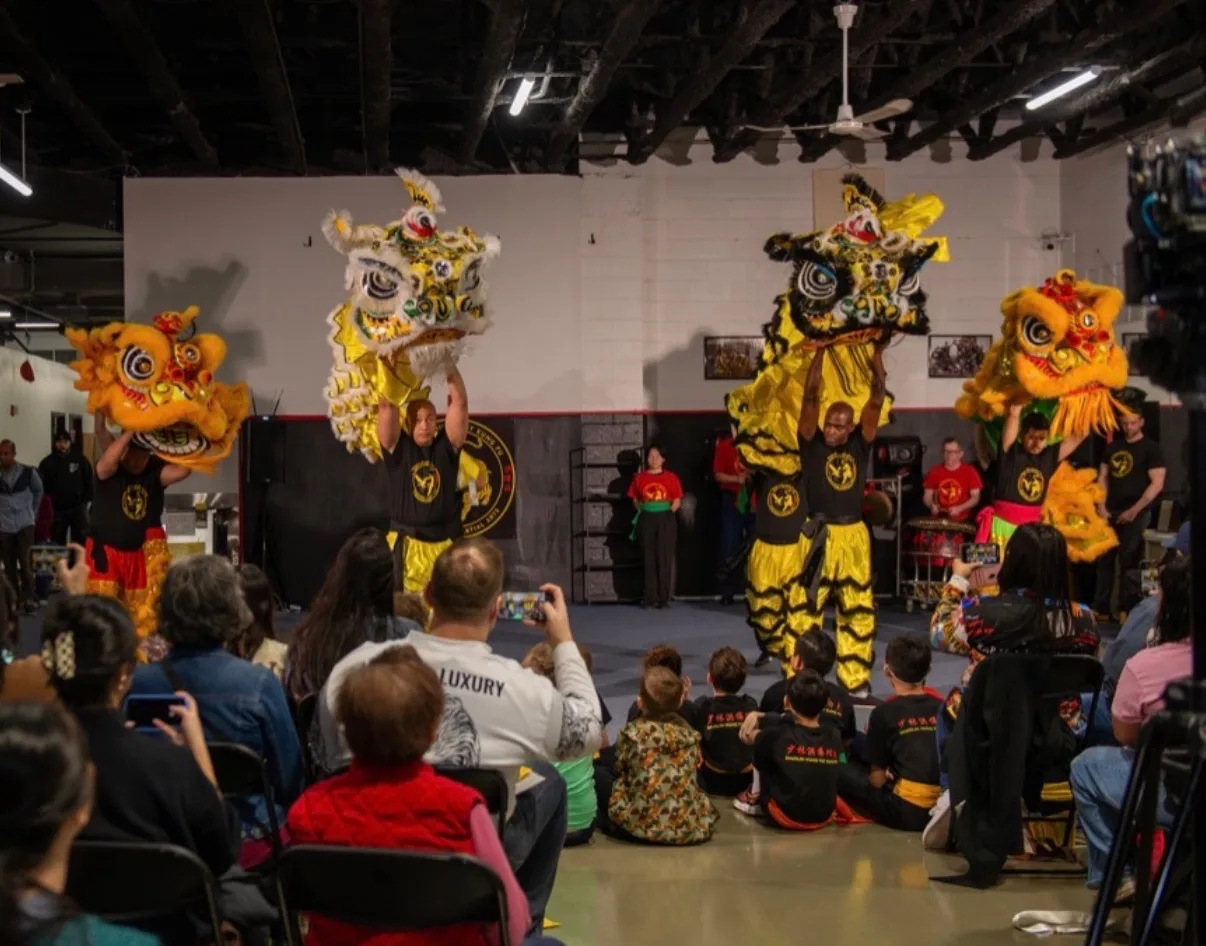
Four lions at a school demonstration 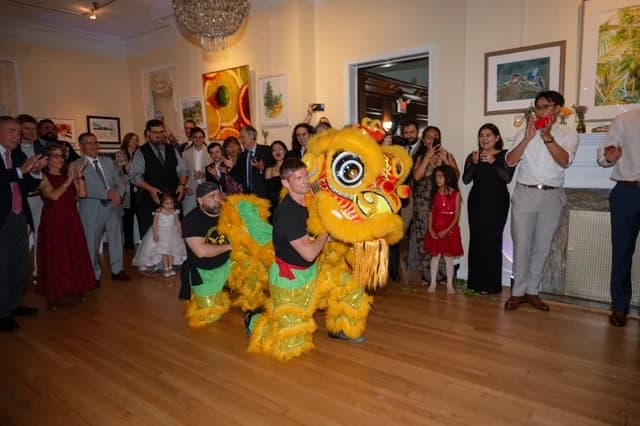
A wedding reception, guests around the floor 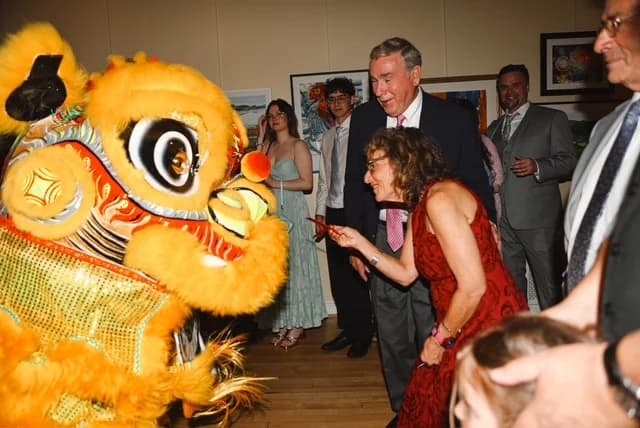
The lion greeting guests at a wedding 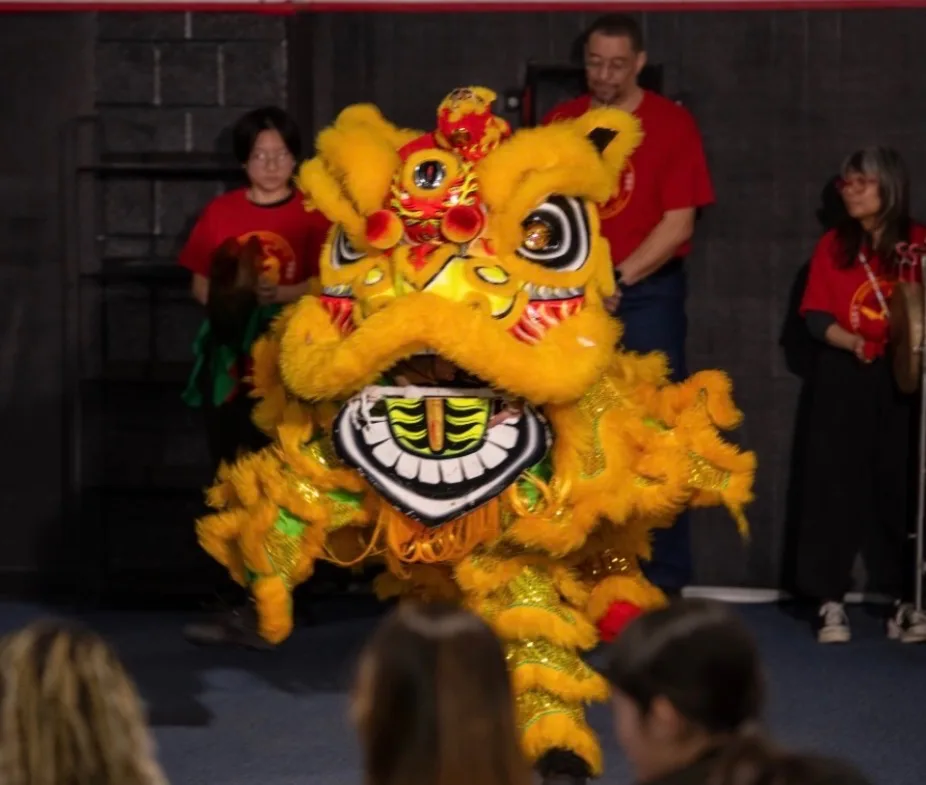
The lion working the room, percussion behind 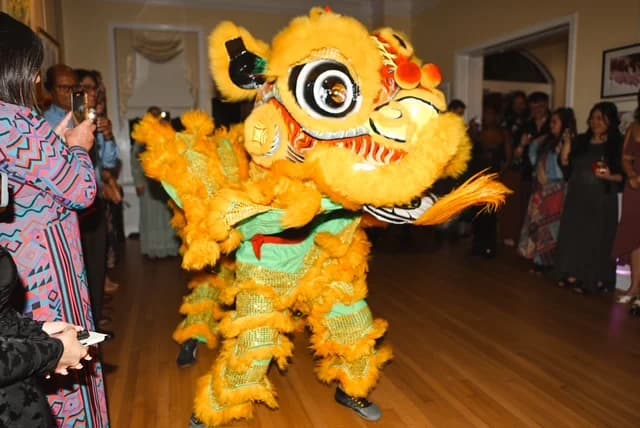
The lion rearing up mid-dance 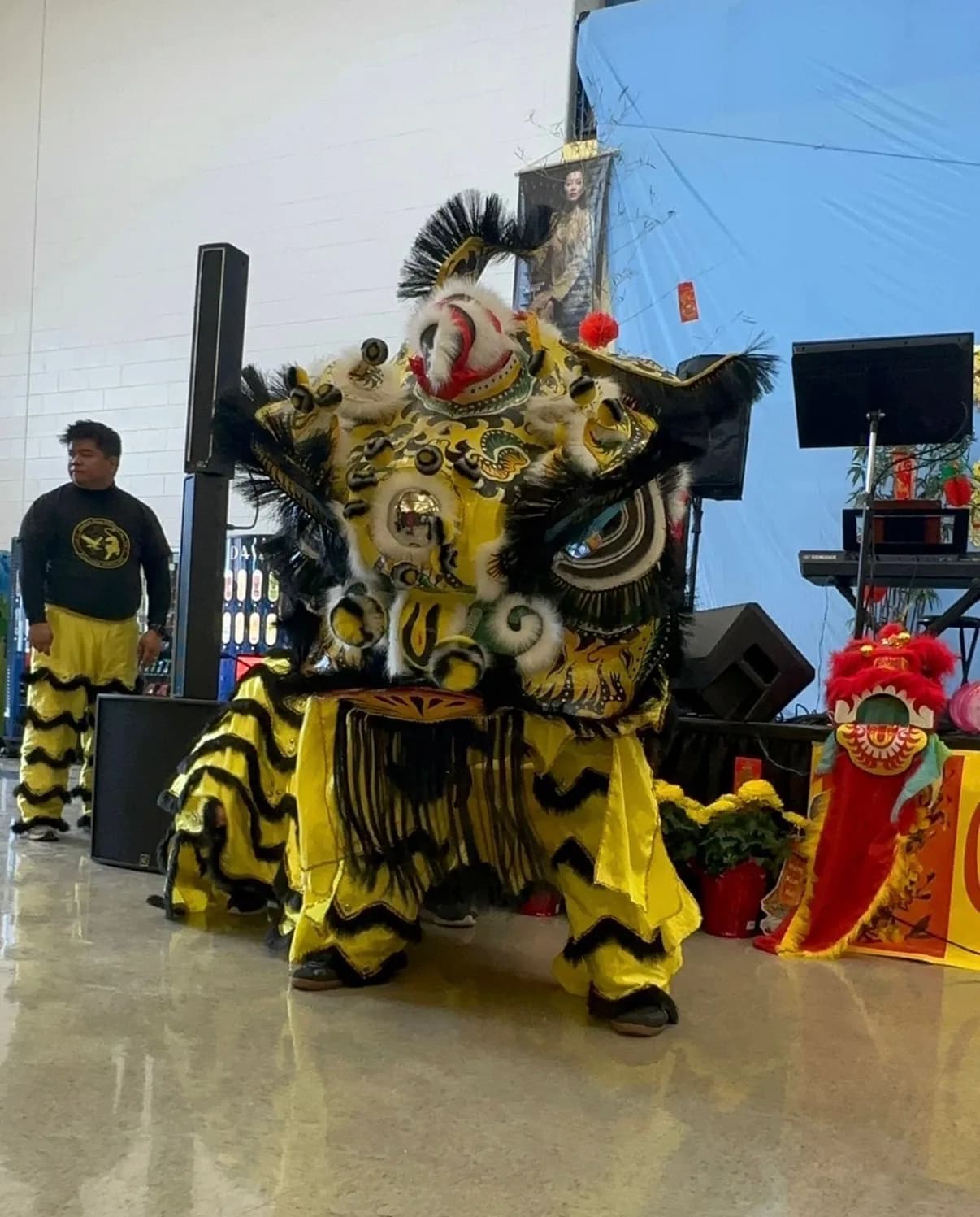
The detail on a traditional Southern lion head 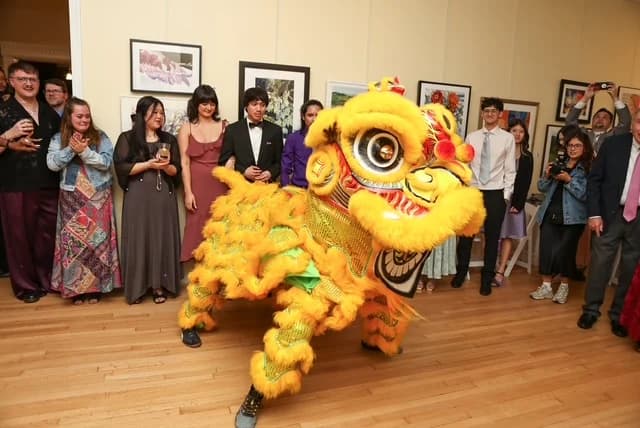
Mid-performance at a wedding reception 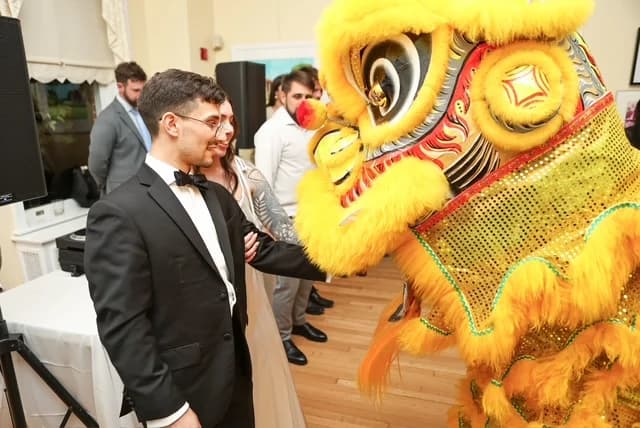
The lion greeting the couple 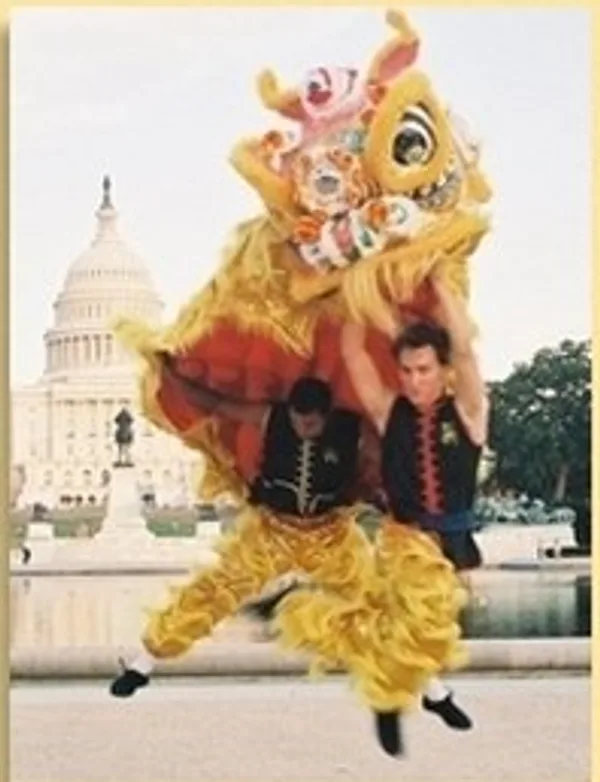
Archive: the lion in front of the U.S. Capitol, Washington, D.C. 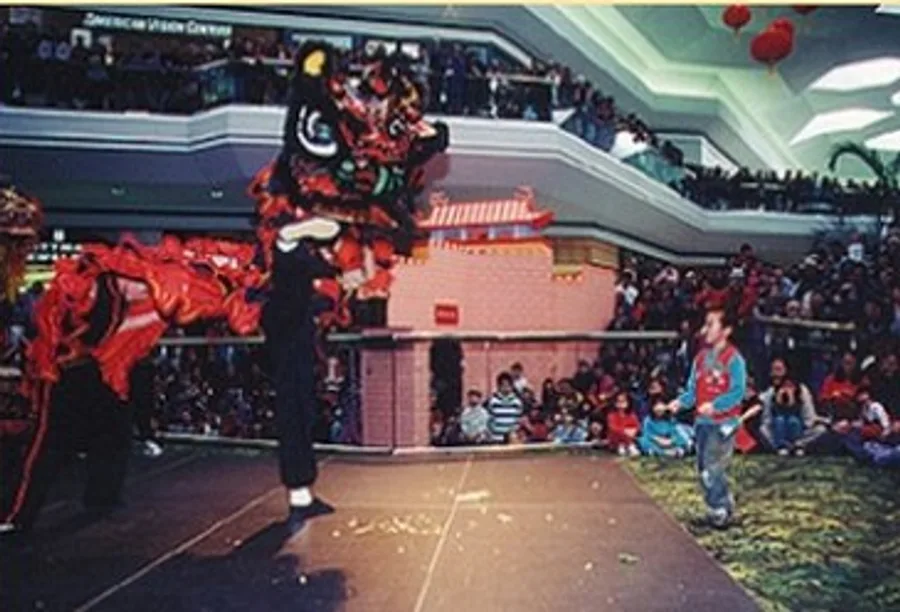
Archive: two lions and the lettuce blessing at an indoor celebration 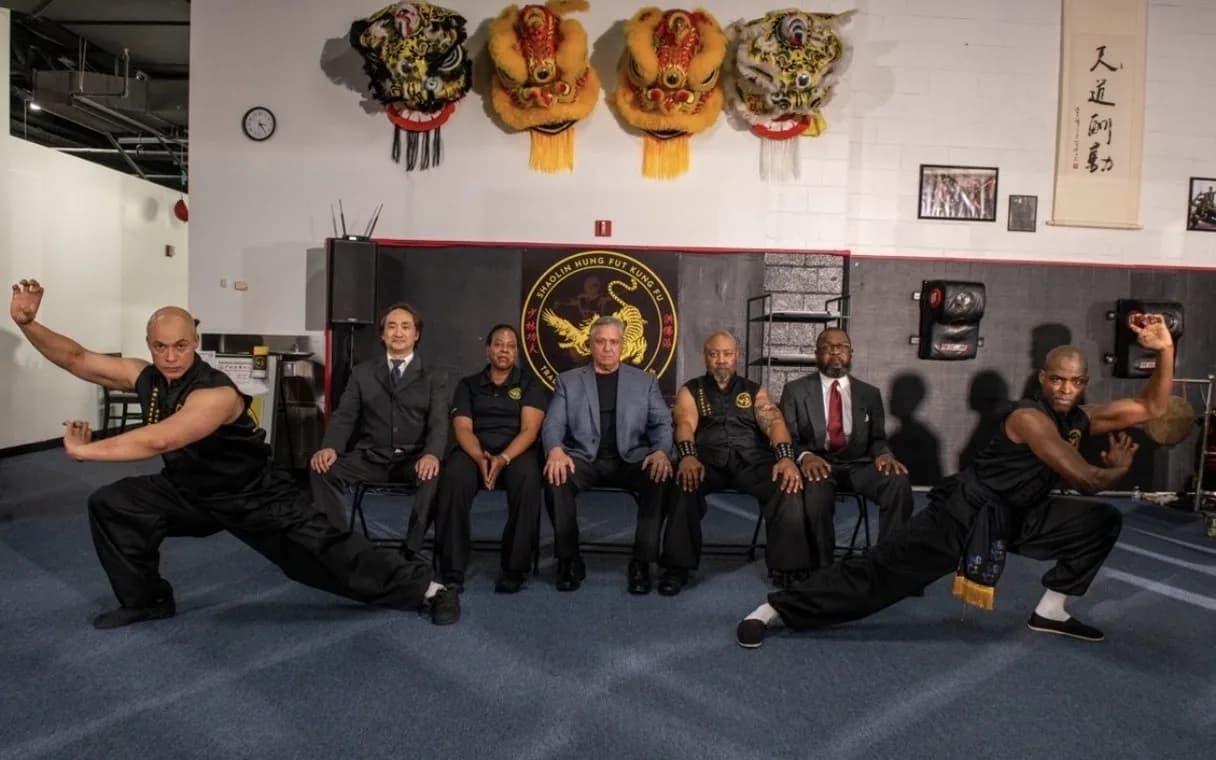
Instructors beneath the school's four lion heads 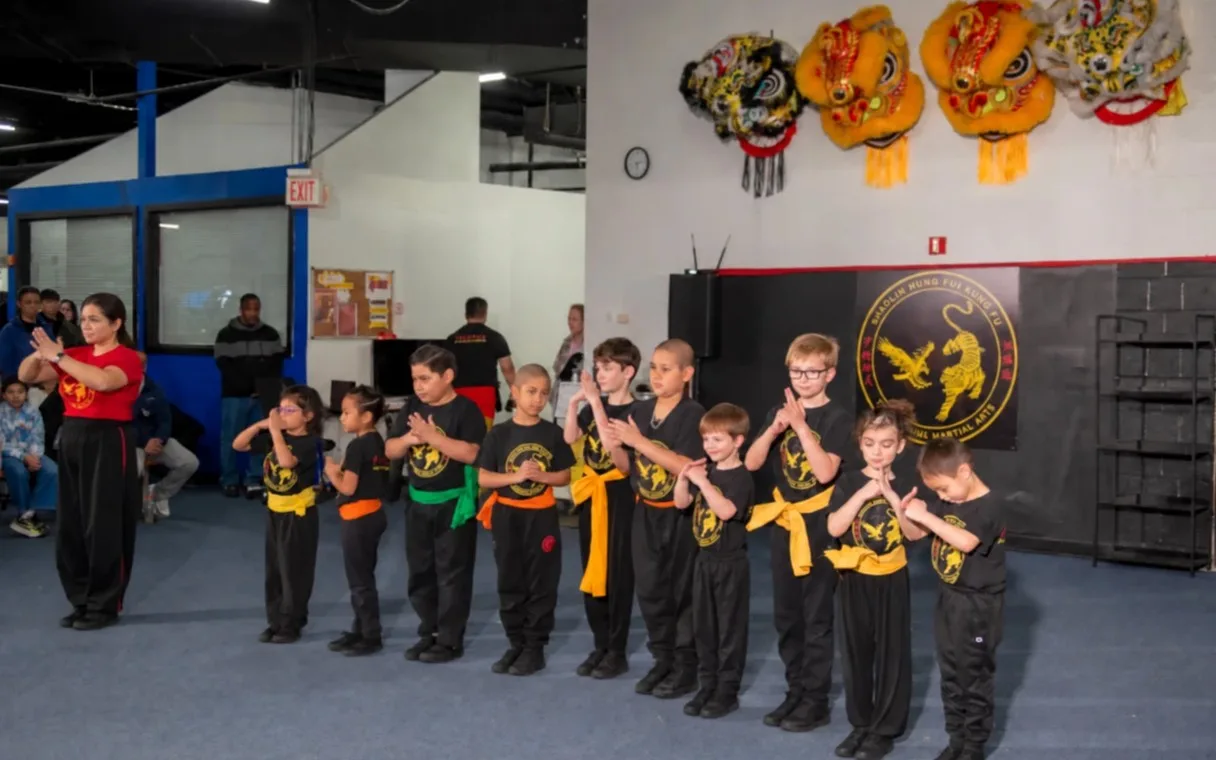
Students salute at a school demonstration 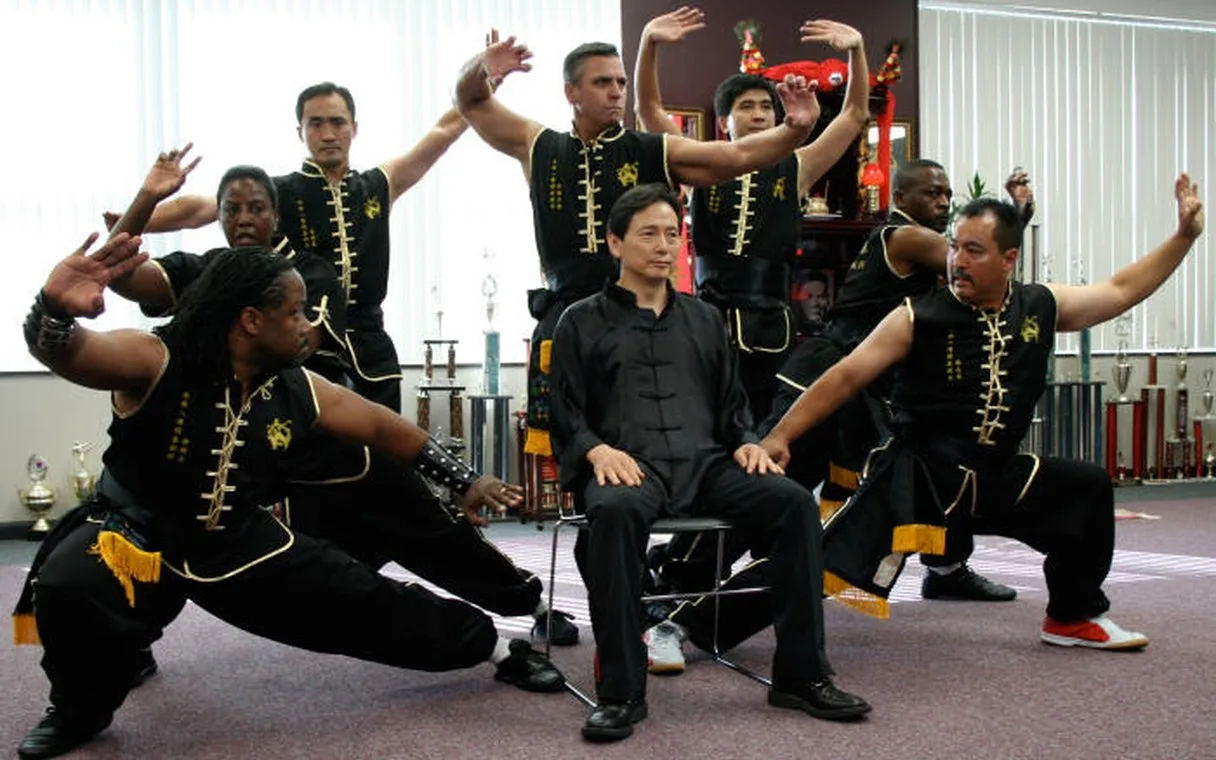
Grandmaster Sifu Tai Yim with senior students 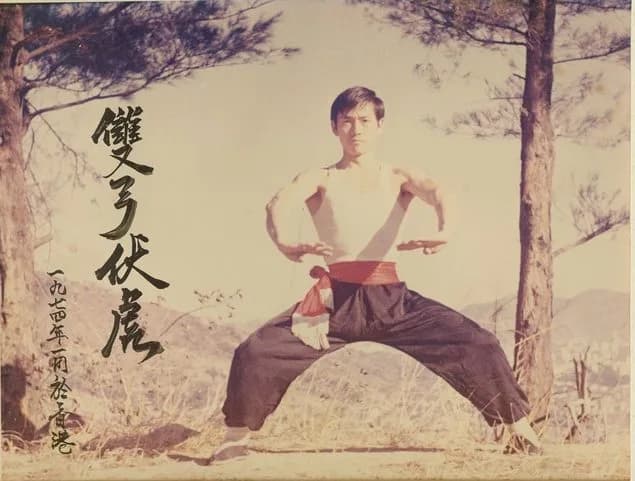
Grandmaster Sifu Tai Yim, Hong Kong, 1974 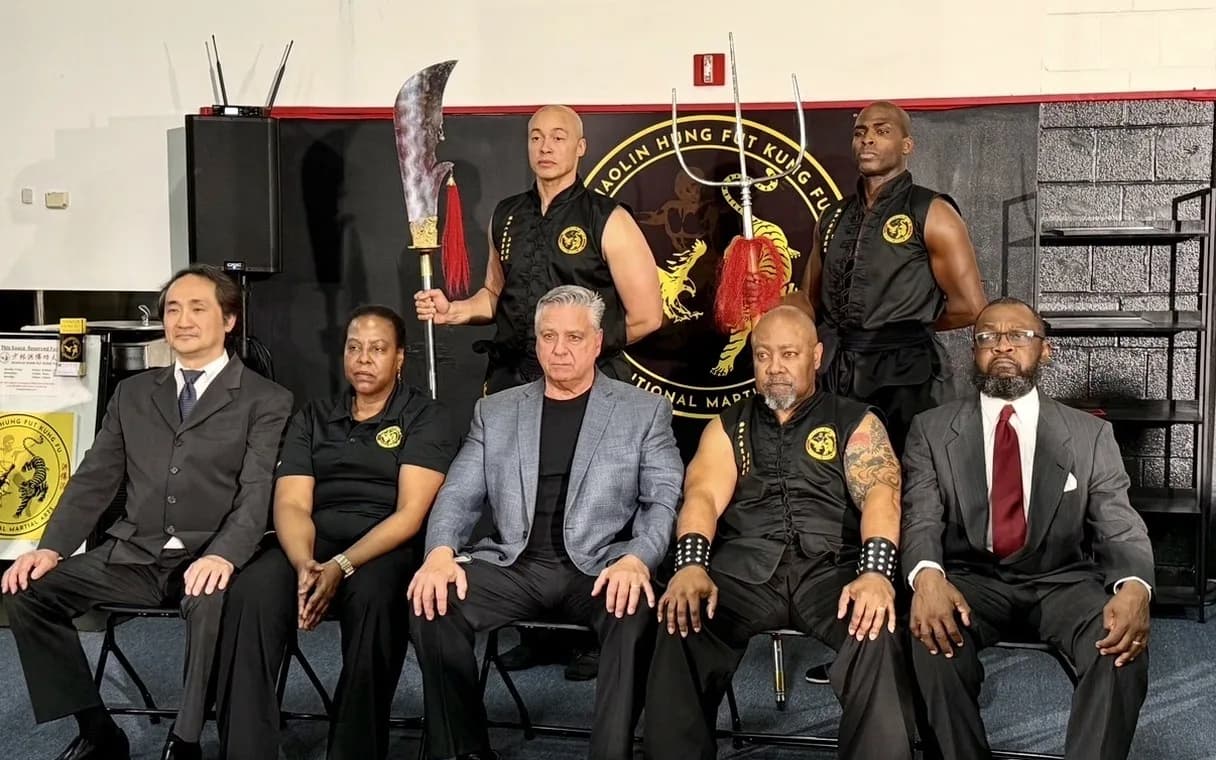
Traditional weapons at a school demonstration 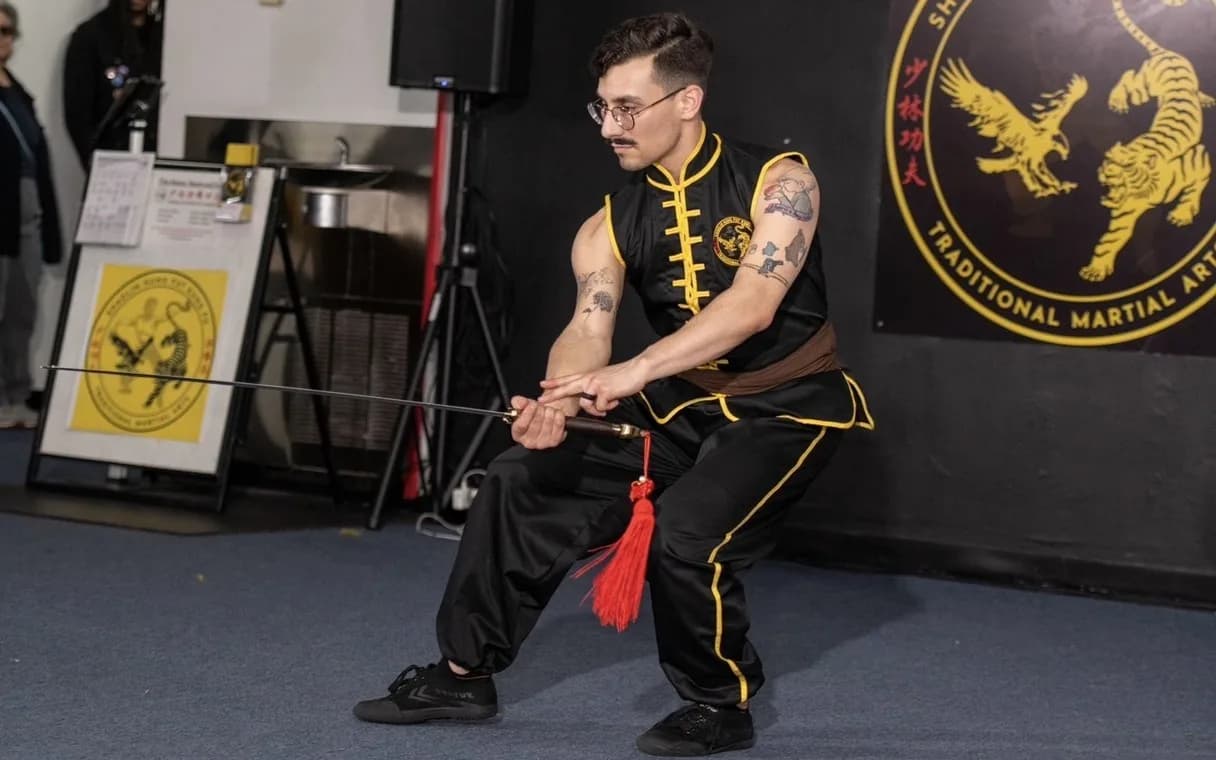
Straight sword form 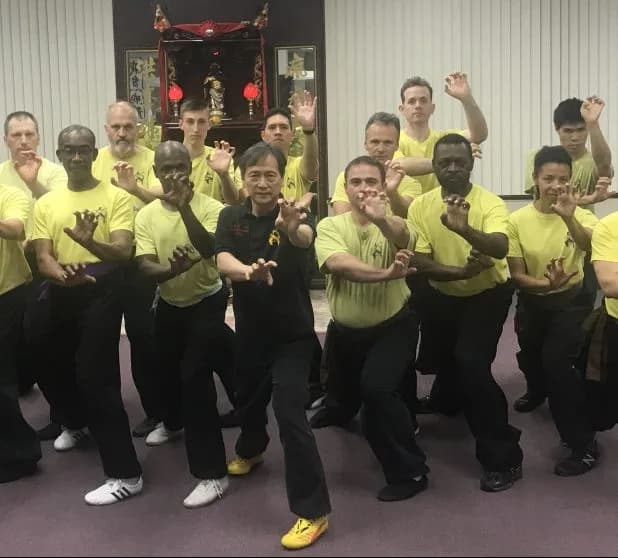
Grandmaster Sifu Tai Yim leading students 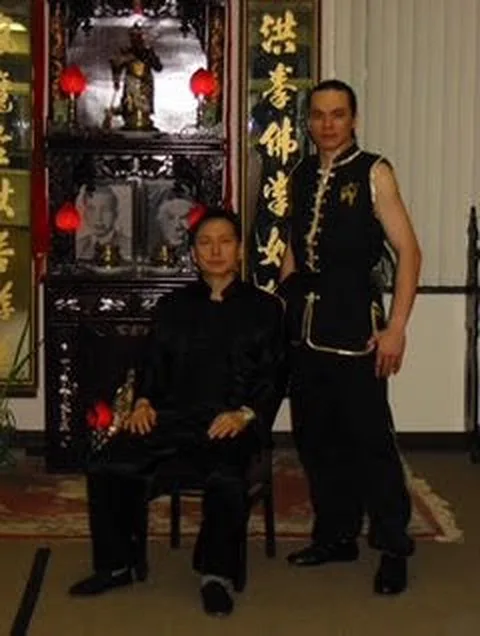
At the school's ancestral altar
What you are looking at
A lion dance photographs well because everything about it is designed to be seen from a distance: the bright silk and fur of the costume, the exaggerated expressions of the head, the low kung fu stances of the dancers and the scattering of lettuce leaves at the climax of the blessing. The images here were taken at events across the region, in restaurants and ballrooms, on sidewalks and plazas, and on festival stages.
The lions we dance are Southern-style lions, the kind traditionally danced by Chinese martial arts schools in Guangdong and across the Cantonese diaspora. The large head with its mirrored forehead, horn, blinking eyes and hinged mouth is worked by the front dancer; the second dancer forms the body and tail. The colors are not decorative. Traditional lions are associated with the heroes of the Three Kingdoms, and a yellow, red or black lion each carries its own character, from the venerable elder to the young fighter.
Look for the percussion behind the lion. The drum sets every movement, and the gong and cymbals answer it; nothing is played from a recording. Look, too, for the lettuce hanging at the doorway of a new business or the scroll being presented to a couple. That is the choy cheng blessing, the moment most hosts want photographed, and the reason a lion dance is more than entertainment.
The photographs at the top are from recent bookings: the lion working a shopping mall atrium under Lunar New Year lanterns with a balcony of spectators above, four lions raised together at a demonstration, the lion playing to the front row with its drum, gong and cymbals behind, and a close view of a Southern lion head showing the mirrored forehead and painted detail up close. The gold and red dragon, held on poles with the pearl at its head, is the team’s dragon dance, performed for festivals, parades and large celebrations alongside the lions.
The wedding photographs come from a reception in a gallery room hung with artwork, and they show what the dance actually looks like at a wedding: the lion working the floor with the guests pressed in a ring around it, playing to an older couple who reach out to it, rearing up at the height of the dance, and coming to greet the newlyweds. Nobody stays seated. That ring of guests, phones up, is the reason couples book the lion rather than another act.
The two archive photographs, the lion in front of the U.S. Capitol and the two lions at an indoor celebration, come from the school’s earlier website and show the team in decades past. The remaining images were taken at the school in Kensington: the four lion heads that hang above the training floor, Grandmaster Sifu Tai Yim with his senior students, and the weapons and forms that the same performers train in. If you have photographs from an event we performed at and would like to see them here, email us. To book the team for your own celebration, request a quote.
Can guests take photos and video during the performance?
Yes, and we encourage it. Lion dance is meant to be shared, and the choy cheng blessing, the lion greeting the couple or the owner, and the lion eating the lettuce are the moments most hosts want captured. Let your photographer know the sequence so they are in position.
What is the difference between Southern and Northern lion dance?
The Southern lion, which we perform, comes from Guangdong and has a large, expressive head with a horn, a moving mouth and blinking eyes, and its dance emphasizes character, footwork drawn from kung fu stances and the choy cheng blessing. The Northern lion is shaggy, more animal-like and closer to acrobatics, with a smaller head and full-body fur.
Southern lion dance is the style traditionally taught in Chinese martial arts schools, and it is the style associated with Lunar New Year visits to businesses. Our team comes from the Shaolin Hung Fut Kung Fu School, a Southern Shaolin lineage, and the lion's movement is built on the same stances used in the kung fu.
Book the team
Put your event in the next set of photos
Tell us your date, venue and occasion and we will reply with availability and a quote.