Dragon dance
Chinese Dragon Dance for Washington, D.C., Maryland and Virginia
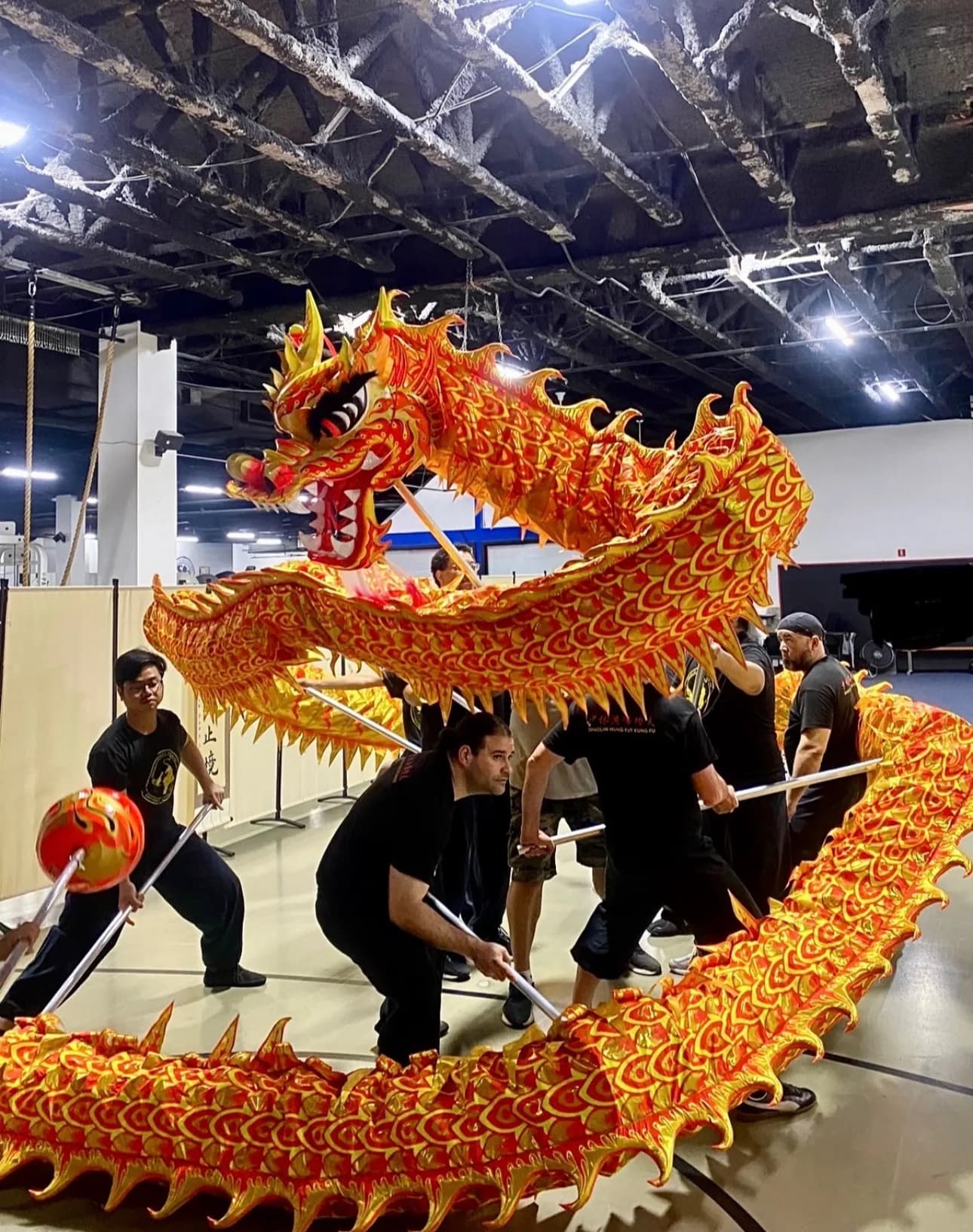
The team performs the traditional Chinese dragon dance as well as the lion dance. A long gold and red dragon, carried on poles by a team of performers and led by the pearl, fills a festival ground, a parade route or a large hall with movement and colour.
Lion dance and dragon dance from one team
Chinese Lion Dancing is the performance team of the Shaolin Hung Fut Kung Fu School in Kensington, Maryland, and for most of our history the lion has been our signature. The dragon is the other great processional dance of the Chinese calendar, and we perform it for hosts who want the scale and spectacle that only a dragon brings: a body many times longer than a lion, rising and falling in waves above the crowd as it chases the pearl. Both dances come from the same school, the same drummers and the same tradition, so a host can book the dragon alone or build a program that opens with the lions and finishes with the dragon.
The dragon in our photographs is gold and red, the colours of prosperity and celebration. It is carried by a line of performers, each holding a pole beneath one section of the body, with the head at the front and a performer ahead of it carrying the pearl on a pole. Every dancer trains in Hung Fut kung fu, the Southern Shaolin system taught at the school since 1979, which is where the low stances, the stamina and the precise timing of a good dragon come from.
What happens during a dragon dance?
In Chinese tradition the dragon is a benevolent creature of water and weather, and its dance asks for good fortune, good harvests and good health for the community that hosts it. The performance begins with the drum, gong and cymbals, which are always played live. The pearl leads the dragon into the space and the dragon follows it, turning, coiling and rearing as the percussion builds. Classic figures include the dragon running in a serpentine line, spiralling around the pearl, weaving its body through itself and rising to a high, open pose for the final salute.
Because the dragon is long, the dance is choreographed to the space. On a parade route it travels with the procession, greeting spectators on both sides. On a festival ground or in a gymnasium it performs in the round. In a hotel ballroom, atrium or lobby it uses the full length of the room and can finish at a stage or at the head table. We walk the space with the host beforehand, or study a floor plan, so the dragon has a clear run and the audience has the best view.
Which is right for my event, a lion or a dragon?
A lion is danced by two performers inside one costume. It is expressive and playful, works close to the guests, and carries the blessing rituals: greeting the host, eating the lettuce and red envelope in the choy cheng ceremony and presenting a scroll. Lions fit restaurants, storefronts, banquet halls and offices, and one or two lions are the right choice for most weddings, openings and corporate receptions.
A dragon is a team performance, and it is at its best where there is room to see the whole body in motion: Lunar New Year festivals and street celebrations, parades, school and university events, community fairs, shopping-centre and plaza openings, and large indoor venues. If you are unsure, tell us about the space and the audience and we will recommend the dragon, the lions or a program that combines them. See the FAQ for a fuller comparison.
Planning notes for hosts
- Space. The dragon needs a long, unobstructed path and room to turn. Outdoors is ideal. Indoors, a gym, ballroom, atrium, lobby or wide concourse works well; a small dining room usually does not, and we will suggest the lions instead.
- Ceiling height. The dragon rears up during the dance. High ceilings let it rise fully; lower rooms are fine with adapted choreography, so tell us the height when you enquire.
- Team size. A dragon takes more performers than a lion, plus the pearl and the musicians, which is why we ask for as much notice as possible, especially around Lunar New Year.
- Sound. The drum, gong and cymbals are loud and acoustic, and they carry well outdoors. We coordinate with any stage program, announcer or DJ so the dragon has the floor.
- Pricing. Dragon dance performances are quoted individually based on date, venue, distance from Kensington and whether lions are included. Contact us for a quote.
Where we perform dragon dances
We bring the dragon anywhere in the Washington, D.C. metro area: festival grounds and parades in the District, community celebrations in Silver Spring and Rockville, school and university events across Fairfax County and Arlington, and large venues throughout Maryland and Northern Virginia. Lunar New Year dates are reserved first, so book those weeks early.
The team's dragon and pearl in the school's training hall 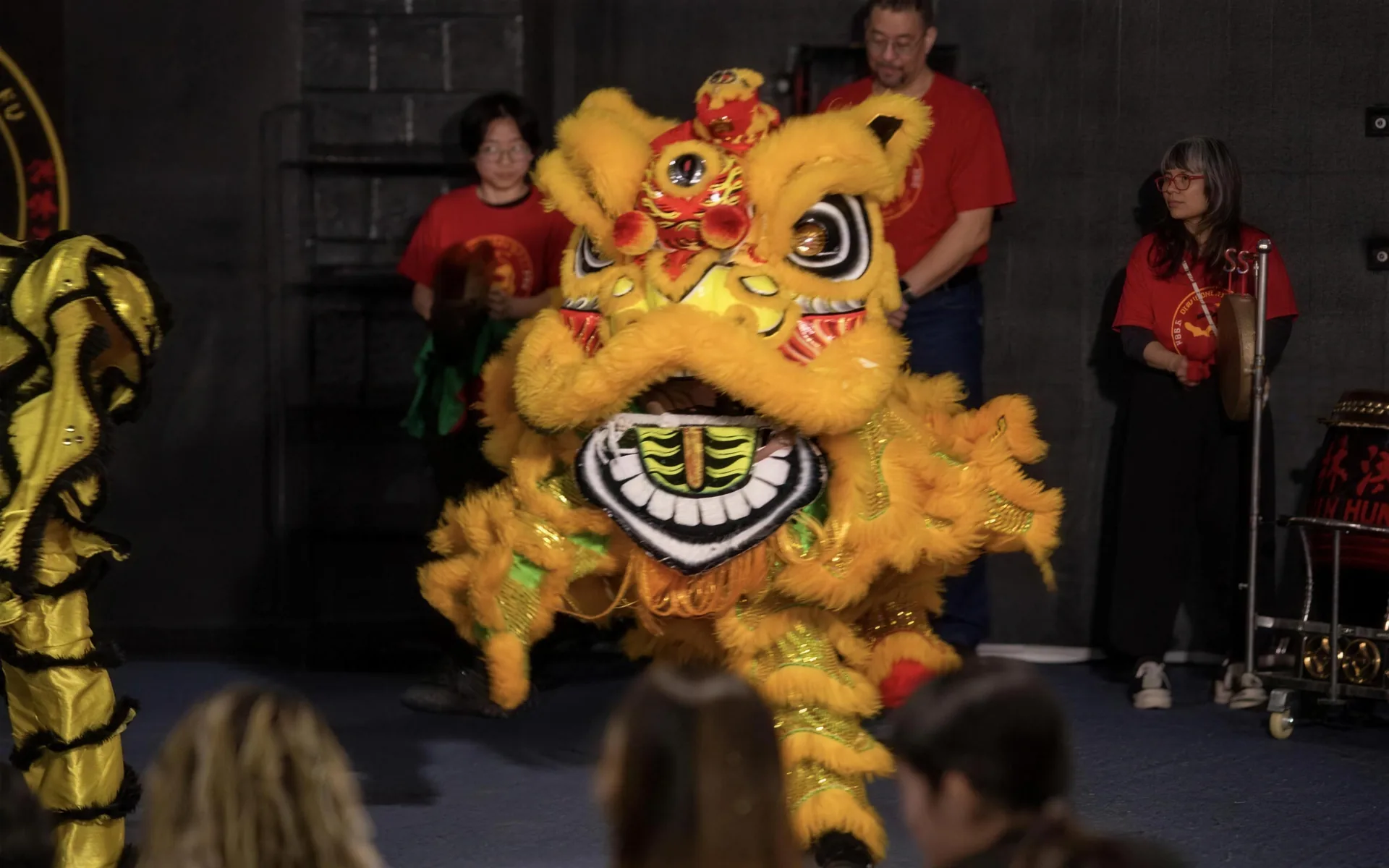
The lion with live percussion at the Kensington school 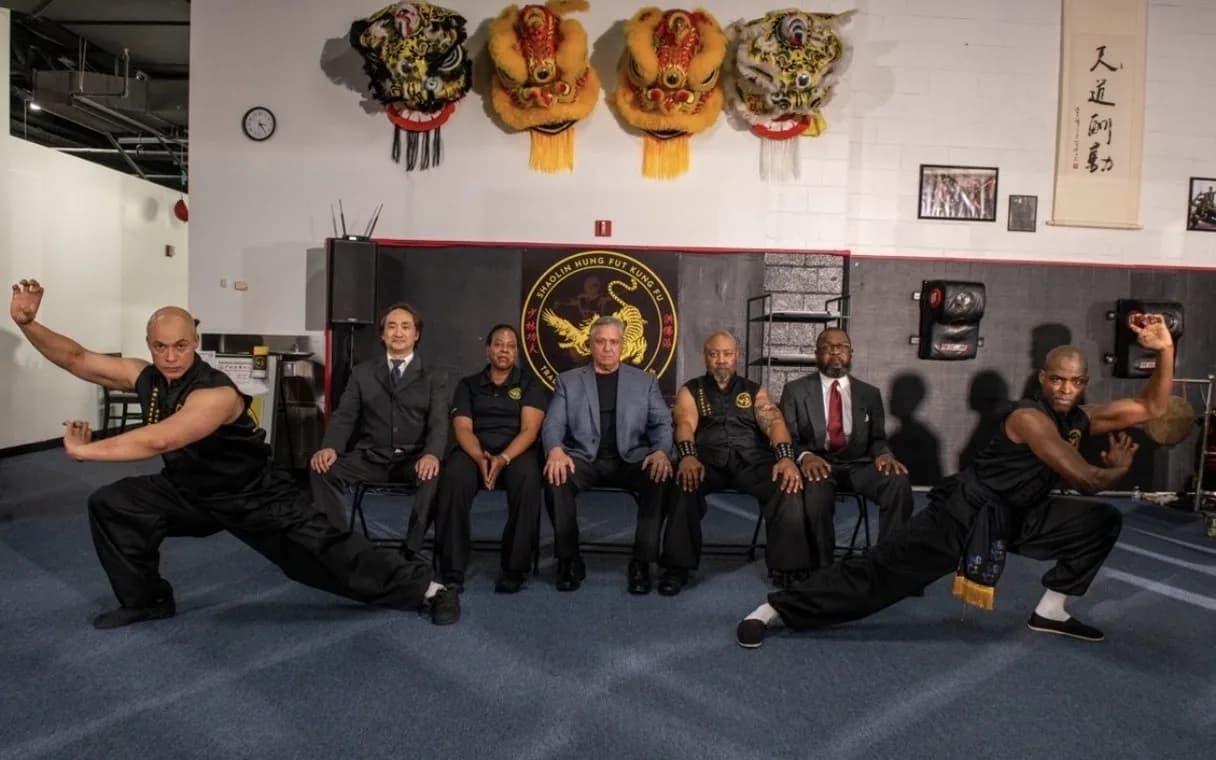
Instructors beneath the school's four lion heads
Do you perform dragon dance as well as lion dance?
Yes. Besides the lion dance, the team performs the traditional Chinese dragon dance, in which a long dragon is carried on poles by a team of performers who follow a pearl. The dragon suits Lunar New Year celebrations, festivals, parades, school and community events and any large venue, and it can be combined with a lion dance in a single program.
The dragon needs more room than a lion: a long clear run outdoors, or a gym, ballroom, atrium or parade route indoors. Tell us about the space when you enquire and we will recommend the dragon, the lions or both. See the dragon dance page for details.
What is the difference between a lion dance and a dragon dance?
A lion is danced by two performers inside one costume, one at the head and one at the tail, and it works close to the audience: greeting guests, playing, and 'eating' the lettuce in the choy cheng blessing. A dragon is a long body carried on poles by a team of performers who move it in waves, turns and spirals as it chases a pearl carried at the front.
Lions fit rooms, storefronts and banquet halls and carry the blessing rituals. Dragons need a longer run and are at their best at festivals, parades, Lunar New Year celebrations and large venues, where the whole length of the dragon can be seen moving. Both are performed to live drum, gong and cymbals, and many hosts book the two together.
How much space does a lion dance need?
A single lion needs a clear area roughly the size of a small room, about 15 by 15 feet, plus a path to enter and move among guests. Two lions need proportionally more. Ceilings should clear the lion's head when the performer at the front lifts it overhead, so about ten feet is comfortable.
Restaurants, lobbies, ballrooms, sidewalks and plazas all work. We also perform in tighter rooms by adapting the choreography. Tell us about the venue when you book and we will plan the routine for it.
How much does a lion dance performance cost?
Pricing depends on the date, location, number of lions and length of the program, so we quote each event individually. Contact us with your date, venue and the occasion and we will send a quote, usually the same or next business day.
Lunar New Year dates, events far from Kensington, multi-lion programs and combined lion dance and kung fu demonstrations are priced differently from a standard single-lion blessing. Tell us everything you have in mind and we will recommend the option that fits your event and budget.
Service area
Where we perform dragon dances
We travel throughout the D.C. metro area from our school in Kensington, Maryland. These are some of the places we perform most often for this kind of event.
Book the team
Ready to book a lion dance?
Tell us your date, venue and occasion and we will reply with availability and a quote.