About the team
Forty-five years of traditional lion dance in the Washington area
Chinese Lion Dancing is the performance team of the Shaolin Hung Fut Kung Fu School in Kensington, Maryland. We have carried the Southern lion through the streets, restaurants, ballrooms and living rooms of the D.C. metro area since the 1970s.
Who we are
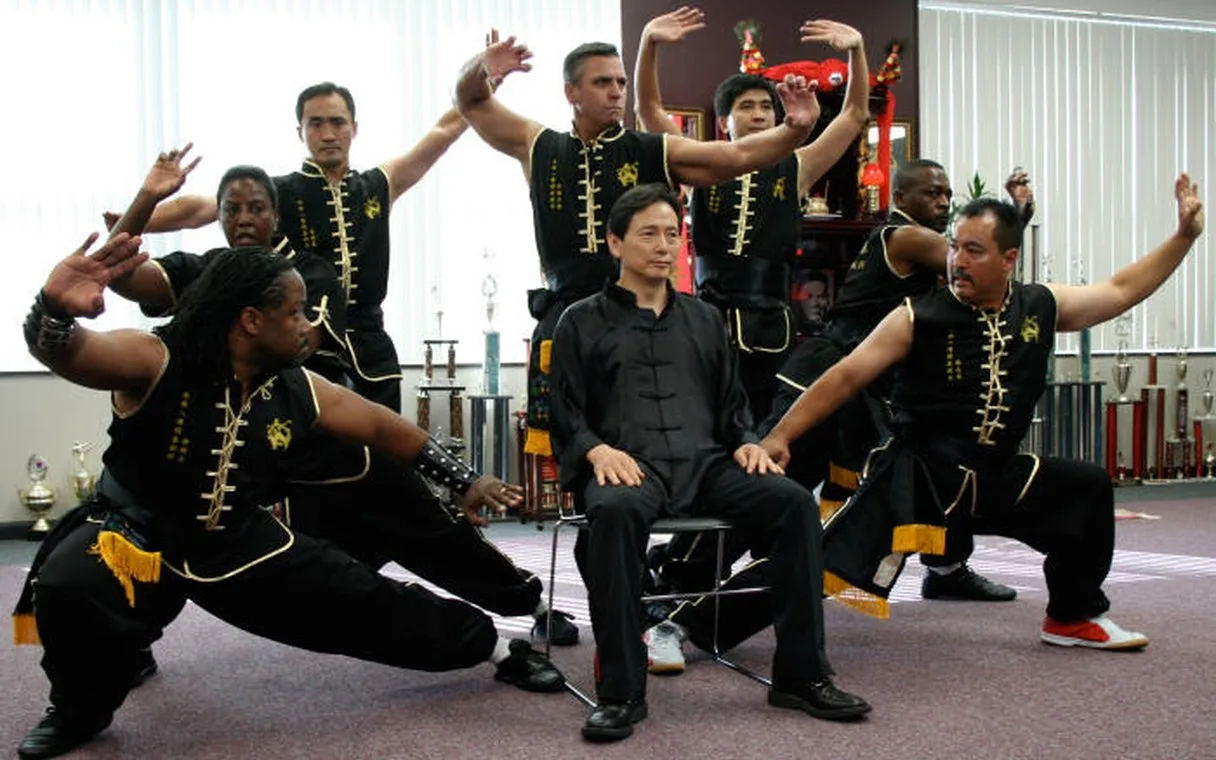
Our team is made up of students and instructors of the Shaolin Hung Fut Kung Fu School, formerly known as Tai Yim Kung Fu. Lion dance is part of the school’s traditional curriculum, so every person under the lion or behind the drum trains in the same Southern Shaolin kung fu that the school has taught in Montgomery County for more than four decades. We are not a hired troupe assembled for a season; we are a school, and the lion is one of the things the school has always done.
We have performed in the Washington, D.C. metro area since the 1970s, which is more than 45 years of Lunar New Year visits, grand openings, weddings, festivals and cultural events. Over that time the team has performed for dignitaries and celebrities, most recently for the Vice President of the United States at her personal residence. Most of our work, though, is for restaurants, shops, families, schools and companies across D.C., Maryland and Northern Virginia who want a genuine lion at their celebration.
Grandmaster Sifu Tai Yim and the Hung Fut lineage
The school was founded in 1979 by Grandmaster Sifu Tai Yim, the 8th Generation Grandmaster of the Hung Fut system. Hung Fut is a Southern Shaolin style that combines the strong, rooted stances and hand techniques of Hung Gar with the relaxed, internal movement of Fut Gar, the Buddhist Palm. Sifu Tai Yim came to the United States in 1977 and opened his first Hung Fut school in Wheaton, Maryland, in 1979. The school is now at 4961 Nicholson Court in Kensington, a few minutes from Wheaton, Bethesda, Silver Spring and Rockville, and it remains the headquarters of the Hung Fut lineage.
Learn more about the school, its classes and its history at hungfutkungfu.com. The lion dance team is part of the same organization, and inquiries for both reach the same office.
What makes a Southern lion dance authentic?
An authentic Southern lion dance is performed by martial artists, accompanied by live percussion, and built around the choy cheng blessing. Those three things are what separate the tradition from a costume walk-on.
Kung fu stances. The Southern lion’s movement comes from kung fu. The performer at the head works from horse stance, bow stance and cat stance, lifting and turning a heavy head while keeping the lion’s body low and alive; the performer at the tail mirrors and supports every step. The lion looks curious, cautious, proud or playful because the dancers have trained those postures for years, not because the costume is elaborate.
Live drum, gong and cymbals. The drum leads the lion. Each rhythm cues a different mood and movement, from the slow, wary approach to the lettuce to the fast, joyful finale, and the gong and cymbals answer it. We never perform to a recording, because the drummer and the lion are having a conversation in real time.
Choy cheng. “Plucking the greens” is the ritual heart of the dance. The lion finds the lettuce hung at the door with a red envelope, tests it, eats it and scatters the leaves to spread good fortune through the business or home. In Cantonese the word for lettuce echoes the phrase for growing wealth, which is why it became the symbol. A performance without the blessing is a show; with it, it is a tradition.
Respect for the lion. Traditional teams treat the lion as more than a prop. New lions are awakened in an eye-dotting ceremony, the head is handled with care, and the performers bow to the host before and after the dance. We keep these customs because they are what our teachers taught us and what the families who book us expect.
Who performs and how we prepare
A single-lion performance brings two dancers and a percussion team; larger events add a second or third lion, a laughing Buddha who leads and teases the lions, or a Hung Fut kung fu demonstration with hand forms and traditional weapons. Everyone on the team trains weekly at the school, and lion dance rehearsals intensify in the weeks before the Lunar New Year, our busiest season.
Before a booking we ask about the venue, the entrance, ceilings and floors, the timing of the program and the moment the host most wants captured. We arrive early, set up quietly, perform, complete the blessing and clear the space. You can see the team at work on our gallery page, read what hosts commonly ask on the FAQ, and request a quote when you are ready.
The lineage in pictures
From Grandmaster Sifu Tai Yim in Hong Kong in 1974 to the lion heads that hang above the Kensington training floor today.
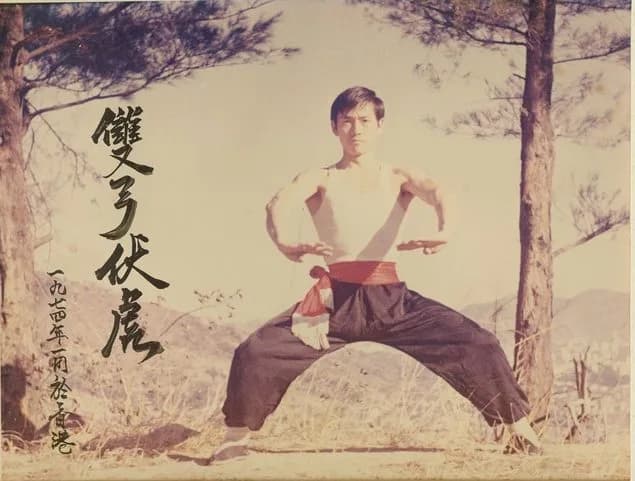
Grandmaster Sifu Tai Yim, Hong Kong, 1974 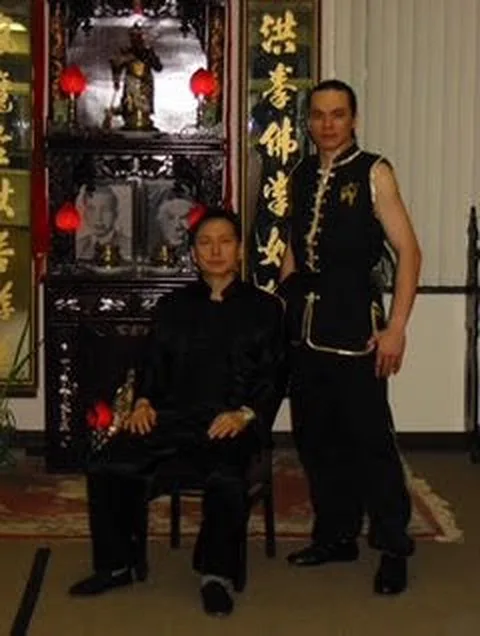
At the school's ancestral altar 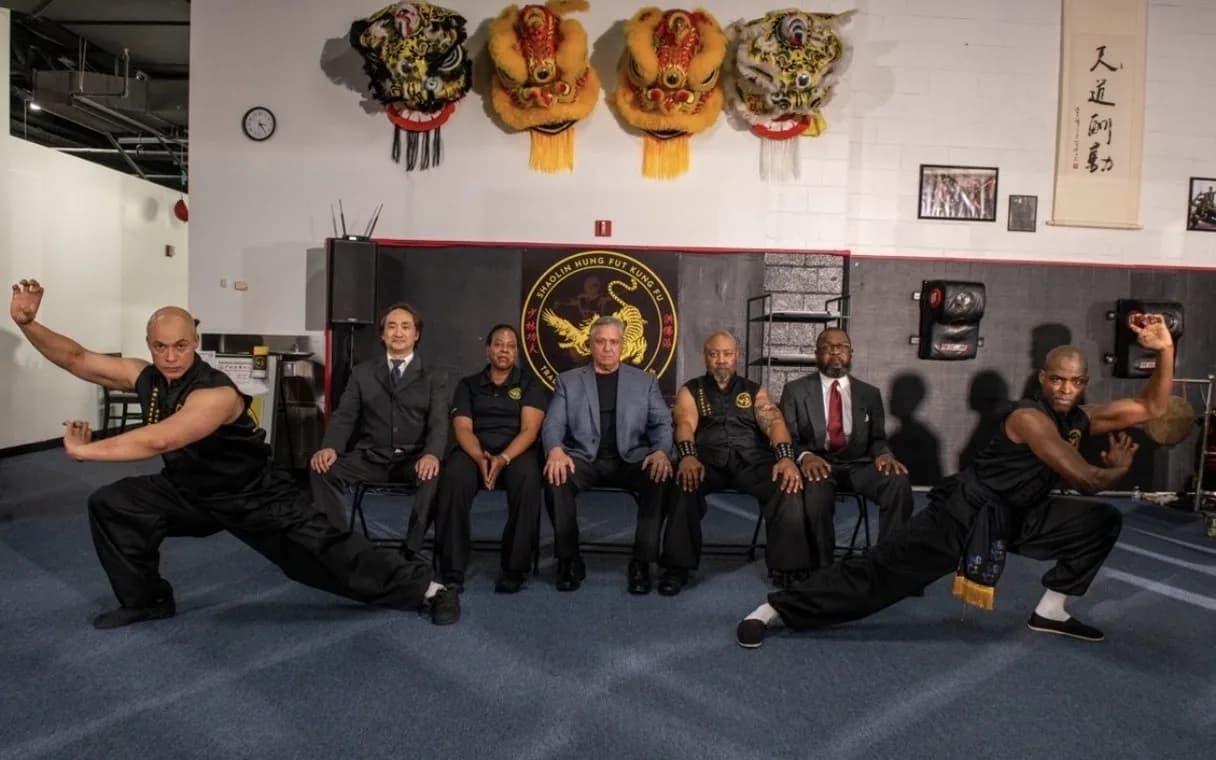
Instructors beneath the school's four lion heads
In the record
Where the team turns up in the record
Independent coverage of the school's lion dance. Follow either link and read it for yourself.
Smithsonian National Museum of Asian Art
The museum's Lunar New Year feature on lion dancing recalls the Tai Yim Kung Fu School's lion dance team visiting Chinese restaurants, bakeries and businesses to bring good fortune for the new year.
Read it
DC News Now
A Living Local DMV segment featuring the Chinese lion dancers of Tai Yim Kung Fu performing a traditional dance.
Read it
Who are the performers?
The performers are students and instructors of the Shaolin Hung Fut Kung Fu School in Kensington, Maryland, founded in 1979 by 8th Generation Grandmaster Sifu Tai Yim. Lion dance is part of the school's traditional curriculum, and the team has performed across the Washington area since the 1970s.
Because every dancer trains in Hung Fut kung fu, the lion's stances, footwork and stamina come from the martial art itself, which is what gives a traditional Southern lion its character.
What is the difference between Southern and Northern lion dance?
The Southern lion, which we perform, comes from Guangdong and has a large, expressive head with a horn, a moving mouth and blinking eyes, and its dance emphasizes character, footwork drawn from kung fu stances and the choy cheng blessing. The Northern lion is shaggy, more animal-like and closer to acrobatics, with a smaller head and full-body fur.
Southern lion dance is the style traditionally taught in Chinese martial arts schools, and it is the style associated with Lunar New Year visits to businesses. Our team comes from the Shaolin Hung Fut Kung Fu School, a Southern Shaolin lineage, and the lion's movement is built on the same stances used in the kung fu.
Book the team
Bring the lion to your celebration
Tell us your date, venue and occasion and we will reply with availability and a quote.